
Water That Actually Leaves Your Property
Drainage & Erosion Solutions in Indianapolis for yards with standing water, washout channels, or basement seepage after heavy rain
Standing water in your yard after rainstorms indicates that surface grading or subsurface drainage is directing water toward your foundation instead of away from it. Indywork Landscaping installs drainage systems and reworks grading to manage runoff and prevent erosion on Indianapolis properties where water flow creates foundation risk, soggy turf, or gullies that wash soil onto driveways and sidewalks.
Drainage solutions begin with identifying where water enters the property, where it pools, and where it needs to exit. Grading adjustments redirect surface flow, and subsurface drains collect water that saturates the soil. French drains, catch basins, or channel systems are installed based on the volume and source of water, and all drainage routes are directed to appropriate discharge points away from structures.
Request a detailed site evaluation to identify water sources and determine the drainage system design for your property.
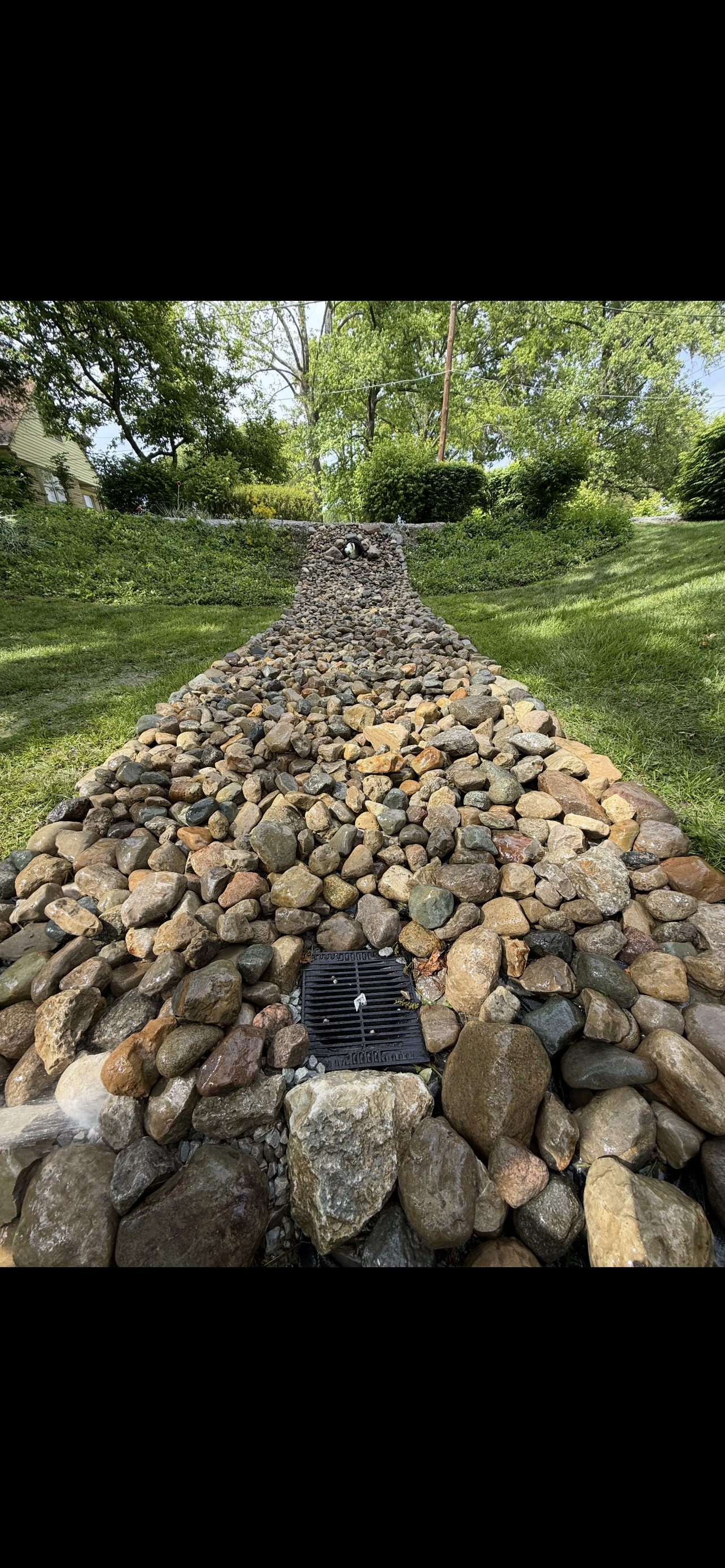
Why Water Problems Happen and How to Stop Them
Water follows the path of least resistance, and if your yard slopes toward your foundation or has low spots where water collects, those areas remain saturated long after rain stops. Clay soil common across Indianapolis drains slowly, so water that cannot soak in quickly runs across the surface and erodes soil or pools in depressions. Drainage systems intercept that water and move it underground through perforated pipe surrounded by gravel, directing flow to street drainage, rain gardens, or dry wells.
After the drainage system is installed and graded correctly, you'll notice that water no longer pools in the yard after rain and muddy areas dry out within hours instead of days. Erosion channels stop expanding, and soil stays in place along slopes rather than washing onto paved surfaces. Basements remain dry during heavy storms because water is intercepted before it reaches the foundation.
Drainage work includes system installation and grading adjustments, but does not include downspout extensions, sump pump installation, or interior basement waterproofing. Properties with significant slope or complex runoff patterns may require multiple drainage components working together to fully control water movement.
Questions Before Starting Your Project
Property owners dealing with water management issues typically ask about what causes drainage problems, how systems are designed, and what results they should expect after installation.
What causes water to pool in the same spot after every rain?
Low areas in the yard collect water that has nowhere to drain, and if the soil is compacted clay, water cannot soak in quickly enough to clear the surface before the next rainfall.
How does a French drain work to manage groundwater?
A trench filled with gravel surrounds a perforated pipe that collects water from saturated soil and carries it away from problem areas to a discharge point, preventing surface pooling and foundation seepage.
Where does the water go after the drainage system collects it?
Water is directed to street storm drains, drainage swales, rain gardens, or dry wells depending on local regulations and site conditions in Indianapolis.
How is grading different from installing a drainage system?
Grading changes the slope of the ground surface to direct water away from structures, while drainage systems use underground pipes to intercept and remove water that saturates the soil or cannot be controlled by surface slope alone.
What site conditions require erosion control measures?
Slopes steeper than a 3:1 ratio, areas with exposed soil and no vegetation, or locations where concentrated water flow creates channels that wash soil downhill all require erosion control methods like grading adjustments, retaining walls, or drainage interception.
Indywork Landscaping designs and installs drainage systems and erosion control solutions across Indianapolis properties where water management failures create foundation risk and landscape damage. Schedule an evaluation to assess your property's water flow patterns and grading needs.