
Yards Cleared Before Seasonal Transitions
Seasonal Cleanup Services in Indianapolis for properties where leaf accumulation and winter debris affect spring growth and drainage function
Leaf layers left through winter create matted barriers that smother turf and prevent spring emergence, while fall debris clogs downspouts and traps moisture against foundation plantings. Indywork Landscaping handles spring and fall cleanup to remove accumulated organic material before it interferes with drainage patterns or creates disease pressure on ornamental beds. The timing matters because Indianapolis properties face distinct challenges in both seasons—heavy spring debris from winter die-back and storm damage, and fall leaf drop that can exceed six inches in areas with mature canopy coverage.
Seasonal cleanup involves removing leaves, twigs, and dead plant material from turf, beds, and hardscape surfaces, clearing gutters and drainage pathways, and cutting back perennial growth that has completed its cycle. This work prepares your property for the next growing phase by eliminating obstructions to new growth and water movement.
Schedule a cleanup to prepare your property before spring growth begins or after fall leaf drop completes.
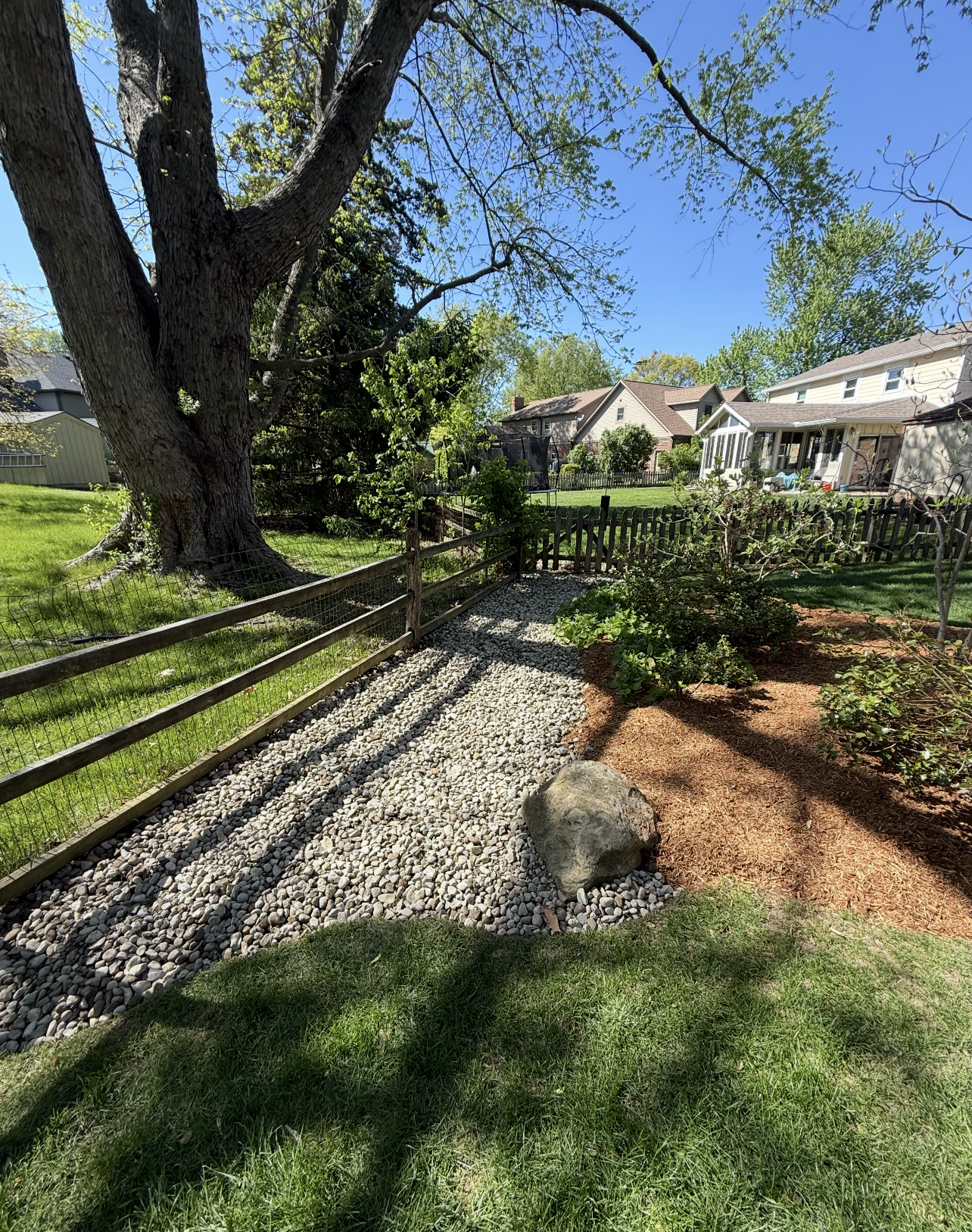
What You Notice Once Yard Debris Is Removed
Cleanup work targets all areas where organic debris accumulates—turf surfaces, garden beds, hardscape edges, and areas beneath shrubs and ground covers. The process includes raking or blowing leaves from lawn areas to prevent smothering, removing debris from bed surfaces to expose soil for mulch application, and clearing material from drainage pathways where it would obstruct water flow during spring melt or fall rain events.
Once the cleanup is complete, you notice that turf areas no longer have dead zones where matted leaves blocked light, bed surfaces are visible and ready for mulch refresh, and water drains properly along swales and near downspouts instead of pooling against structures. Spring cleanup reveals winter damage to perennials and shrubs so you can address dieback before the growing season begins, while fall cleanup removes the leaf volume that would otherwise require multiple sessions to manage once wet and compacted.
The service includes debris removal and disposal but does not typically include pruning, bed edging reestablishment, or mulch installation, though those tasks are commonly scheduled immediately following cleanup when bed surfaces are accessible.
Answers to Frequent Service Questions
Property owners usually need clarity on timing and what the cleanup process involves before scheduling seasonal services.
When should spring cleanup be scheduled in Indianapolis?
Spring cleanup should occur after the final frost risk passes but before perennial growth accelerates, typically mid-March through early April. This timing allows removal of winter debris without damaging emerging growth while still addressing material before it becomes embedded in new turf.
What does fall cleanup include?
Fall cleanup focuses on removing leaf accumulation from turf and bed areas, clearing gutters and drainage pathways, and cutting back spent perennials. The work typically occurs after leaf drop completes in late October through November, though properties with early-dropping species may require interim sessions.
Why does debris removal matter for spring growth?
Matted leaves block sunlight and trap moisture against turf and plant crowns, creating conditions for fungal disease and preventing normal spring emergence. Removing this barrier allows air circulation and light penetration that turf and perennials need to break dormancy effectively.
How is yard debris disposed of after removal?
Organic debris is typically removed from the property for composting or municipal yard waste processing. Volume can be significant on properties with mature trees—a single large oak can drop several cubic yards of leaves in a season.
What happens if cleanup is delayed until growth has already started?
Delayed spring cleanup requires working around emerging perennials and risks damaging new growth during debris removal. Delayed fall cleanup means working with wet, compacted leaves that are harder to remove and more likely to have already caused turf damage underneath.
Indywork Landscaping schedules cleanup services based on actual leaf drop and weather conditions rather than fixed calendar dates. Contact us to arrange spring or fall cleanup timed to your property's specific debris patterns and seasonal transition needs.