
Beds That Retain Moisture Through Summer Heat
Mulching Services in Indianapolis for garden beds where weed pressure and moisture loss reduce plant performance during growing season stress
Mulch depth directly controls how much soil moisture evaporates during July and August dry stretches and how successfully weed seeds germinate in your beds. A two- to three-inch layer creates enough barrier to suppress most annual weeds and insulate soil from temperature swings that stress shallow roots, while insufficient depth allows light penetration that triggers weed germination and does little to slow evaporation. Indywork Landscaping provides mulch installation and bed refreshes using decorative mulch that improves moisture retention, moderates soil temperature, and creates a finished appearance across your property's planting areas.
Mulching involves calculating proper depth based on existing mulch condition, distributing material evenly without burying plant crowns or creating volcano mounds against tree trunks, and pulling mulch back from direct contact with woody stems where moisture encourages rot. These details determine whether the mulch layer performs its intended functions or creates new problems.
Request a bed evaluation to determine current mulch depth and refresh requirements for your planting areas.
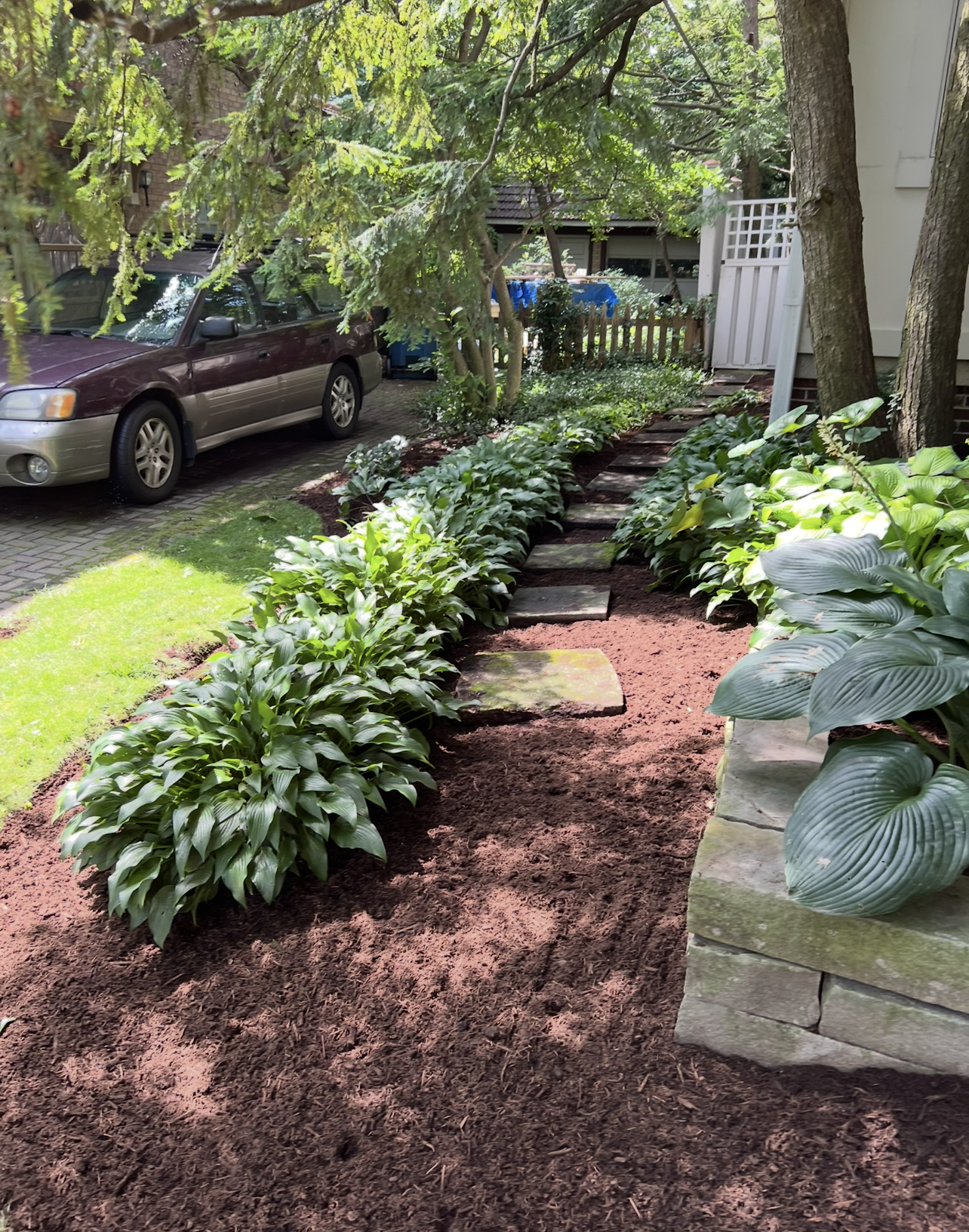
Why Proper Mulch Application Works for Weed Control
Mulch application starts with assessing existing depth and condition to determine whether a full refresh or top-dressing is appropriate. The material is distributed to achieve consistent depth across the bed—typically two to three inches—while maintaining clearance around plant stems and avoiding buildup against structures. Hardwood mulch common to this region decomposes over twelve to eighteen months, requiring periodic replenishment to maintain effective depth.
After mulch installation, you notice that beds maintain darker, more consistent soil moisture even during week-long dry periods, fewer weeds emerge because light cannot reach the soil surface to trigger germination, and soil temperature remains more stable during spring and fall temperature swings. The visual uniformity also defines bed edges clearly and creates contrast with surrounding turf or hardscape.
Standard mulch installation includes material delivery, distribution, and edging cleanup. It does not include weed removal prior to mulching, bed redesign, or plant installation, though those services are often scheduled in conjunction with mulch refresh when beds are being renovated.
Questions Before Starting Your Project
Homeowners typically ask about mulch selection, application timing, and how the material affects plant health before scheduling bed refresh services in the Indianapolis area.
What type of mulch works best for Indianapolis beds?
Shredded hardwood mulch is common because it decomposes slowly, knits together to resist washing on slopes, and provides good weed suppression. Dyed mulches maintain color longer but offer no performance advantage, while fine-textured mulches decompose faster and require more frequent replacement.
How often should mulch be replenished?
Annual top-dressing maintains adequate depth as the existing layer decomposes and settles. Properties with steep slopes or heavy spring runoff may need more frequent attention in areas where mulch washes downhill, while flat beds with established plantings often go eighteen months between applications.
Why is mulch depth important?
Depth below two inches allows light penetration that triggers weed seed germination and provides minimal insulation or moisture retention. Depth exceeding four inches can create overly wet conditions near plant crowns, restrict oxygen to roots, and provide habitat for voles and other pests.
When should mulch be applied?
Spring application before summer heat arrives provides maximum benefit for moisture retention during stress periods. Fall application after cleanup provides winter insulation for roots but offers less weed control benefit since most annual weeds have already completed their cycle.
What preparation is needed before mulching?
Beds should be cleared of debris and existing weeds removed before new mulch is applied. Mulch placed over existing weed growth simply provides those plants with additional rooting medium and makes future removal more difficult.
Indywork Landscaping calculates mulch volume based on bed dimensions and existing depth to avoid under-application that reduces performance or over-application that creates problems. Schedule a bed refresh to restore proper mulch depth and refresh the appearance of your planting areas.